Table Of Content

Implement algorithms and models that forecast potential issues within the current layout, allowing proactive adjustments before challenges materialize. Initiate employee suggestion programs that encourage warehouse staff to contribute ideas and observations regarding layout optimization. These programs not only empower the workforce but also serve as a wellspring of practical, on-the-ground insights that might escape traditional assessments. Selecting impact-resistant barriers is essential, especially in areas with high equipment movement. These barriers absorb and dissipate impact energy, reducing the severity of accidents. Impact-resistant barriers are strategically placed to safeguard both personnel and infrastructure.
What to Consider When Designing Your Warehouse Layout
Here are the four main fulfilment processes to consider when planning your warehouse layout. The L form also reduces congestion by preventing back-and-forth movement and properly separating products with inbound and outbound docks on opposite sides. However, the L-shaped layout’s biggest drawback is the area required to operate this movement efficiently. Find out why creating a perfect smart warehouse design is important in this article. Furthermore, this article addresses several crucial factors to bear in mind while creating a warehouse layout and illustrates the importance of a practical layout. One of the most important tasks for business owners is designing an ideal warehouse.
The importance of warehouse design and setup
How Ikea's shop layout influences what you buy - BBC.com
How Ikea's shop layout influences what you buy.
Posted: Wed, 31 Jan 2018 08:00:00 GMT [source]
Instead of feeling like you have to reinvent the wheel, there are proven approaches for warehouse organizational success. Read on to learn about warehouse organization best practices and which layout fits your business best. The next chapter will discuss about inventory management and its success factors. Of companies are already taking automated warehouse systems very seriously and making plans to implement. Whether you pick a popular flow or choose to do things differently, this step is important to sort out before making any major moves in the overall layout. The L shape features the shipping area on one side and the receiving on the adjacent side at a 90-degree angle.
Step 2: Space Evaluation
Order fulfillment accelerates, error rates diminish, and the overall efficiency of warehouse processes reaches a crescendo. In large-scale warehouses, they traverse expansive areas quickly, capturing real-time data and providing a comprehensive overview of inventory levels, equipment status, and potential bottlenecks. This rapid reconnaissance capability transforms drones into invaluable assets for operational decision-making. The modular nature of Autostore provides unparalleled flexibility in warehouse design. As inventory needs evolve, the system adapts with ease, ensuring that every bin is strategically placed for optimal accessibility. This flexibility extends to the scalability of operations, making Autostore a versatile solution for warehouses of varying sizes.
Production congestion may occur when shipping and receiving sites are adjacent and have similar domains, which is a disadvantage of the U-shaped flow. Finding the best fit depends on whether one works with what you already have and want to accomplish. Discover why SmartDraw is the best warehouse layout & design software available today. However, your type of business may be better suited to additional shelving that’s spread out wide, rather than tall. Horizontal storage units are also great for temperature-controlled or fragile products that need additional care.
This provides greater operability and efficiency in the work of the personnel in this department. Given the impact that accurate checking and, above all, correct positioning, can have on the future performance of the warehouse, this area must be as large and as separate as possible. Depending on the type of warehouse, it may or may not be necessary to transform the units received. For example, it may be necessary to split the pallets that have arrived into smaller units, remove parts that are strapped together, etc. They normally consist of a large flat area that the lorries have direct access to, with the lorries positioned so that they can be loaded or unloaded using forklift trucks.
Consider factors such as ceiling height, load-bearing capacity, and the overall structural integrity of the facility. This analysis lays the foundation for determining the feasibility and extent of vertical storage solutions. Achieving the right balance between narrow and wide aisles is crucial for overall warehouse efficiency. It requires a nuanced approach that considers the specific needs of the facility, the types of products stored, and the characteristics of the material handling equipment in use. The primary consideration in determining aisle width is the type of equipment employed within the warehouse.

In summary, a well-thought-out warehouse layout can help improve productivity, reduce human error, increase safety and lower shipping costs. Looking ahead, the integration of Artificial Intelligence (AI) and Machine Learning (ML) is poised to redefine warehouse operations. AI algorithms can analyze vast datasets to predict demand patterns, optimize inventory levels, and even foresee potential equipment failures.
Opponents target White Twp. warehouse plan - New Jersey Herald
Opponents target White Twp. warehouse plan.
Posted: Thu, 08 Aug 2019 07:00:00 GMT [source]
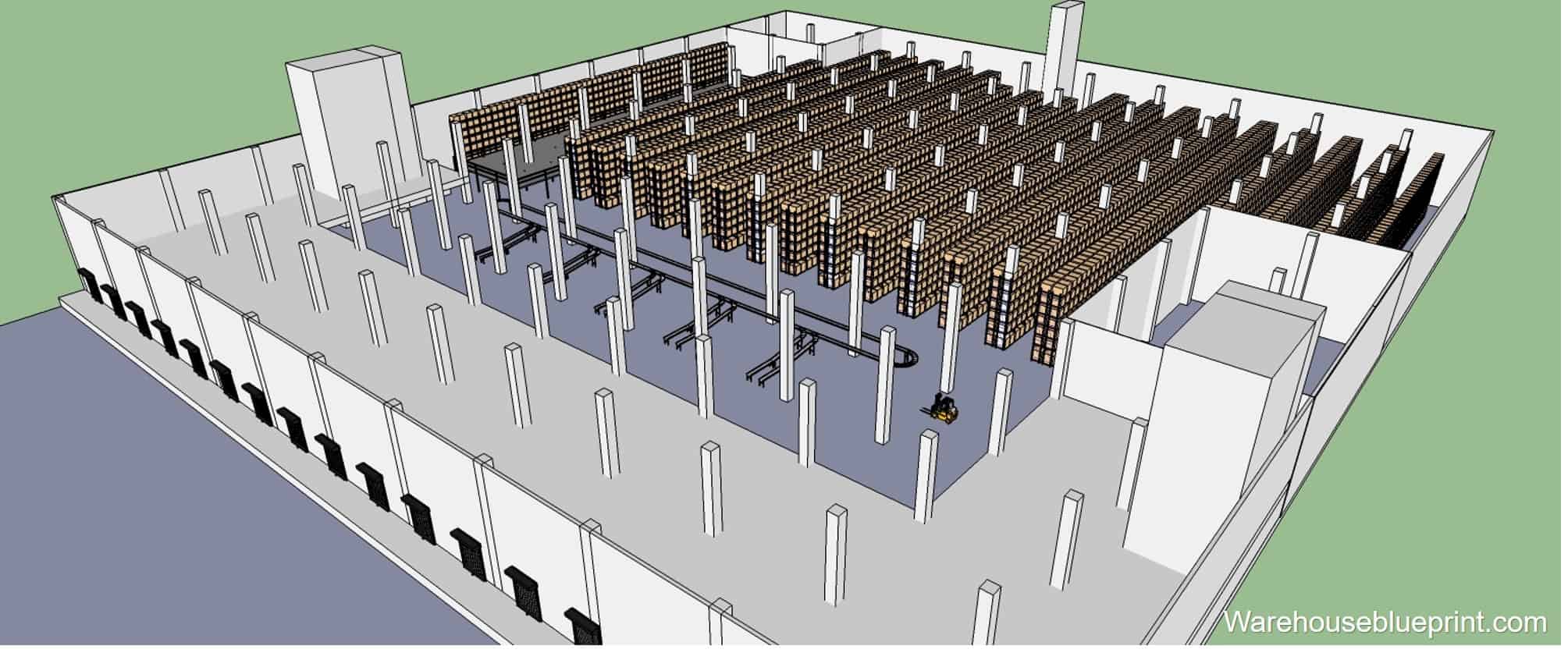
The most significant disadvantage of the L-shaped design is how much space is needed to run this flow effectively. As simple as it sounds, keeping things tidy can help to avoid significant issues within the warehouse. The right warehouse floor plan should reduce the chances of items being misplaced or mishandled, as everything has its place within the flow of operations. A warehouse layout is the planned design of a warehouse to streamline overall operations.
One approach is moving your products out of bins and onto shelves, or vice versa. Sometimes it’s difficult to see what improvements can take your operations to a new level until you try them. Having a robust inventory organization plan is one of the many advantages of warehousing. This involves the equipment, storage areas, signage, labels, and warehouse management process flow for the products you sell.
Following your decision to begin constructing your warehouse, you should make a few considerations. Then, make a checklist of these essential practices before designing the ideal layout for your company. Real-time inventory tracking is a crucial component of the eCommerce supply chain and is essential for eCommerce firms that wish to grow. Unloading inventory may need heavy lifting and tools like forklifts and pallet jacks, depending on their size and volume. Inventory can be kept on a palette, a shelf, or a container depending on the size, weight, and type of goods you sell.
The internal environment can be more effectively preserved if the closing system is automated. Warehouse management in one facility to the next is possible by providing a consistent experience to all customers in all locations. Batch picking consists of working on the same orders in bulk or batches all at once in a row, instead of one at a time or by different people in between other orders. This picking strategy is ideal for fulfilling many identical orders that use the same SKUs. Once you determine how to set up different work stations, you can create paths with signs or floor tape to provide clear direction for your staff.
This rapid reconnaissance capability transforms drones into invaluable assets for informed decision-making in the order picking process. Automation integration serves as the architect of spatial optimization, redefining how available space is utilized within the warehouse. From vertical storage solutions to dynamic storage configurations, these technologies maximize spatial efficiency.
Before diving into perfecting your warehouse design and layout, you’ll first need to consider a few crucial factors. Regardless of whether you own or manage a distribution center, retail warehouse, or flex space, optimizing your warehouse layout makes it easier to manage and increases productivity. Loading and reception areas are positioned on one side, while shipping and picking areas are on the adjacent side. Zone picking consists of assigning pickers to a specific area of the warehouse and only pick one order at a time within that area.
Adhering to these standards is essential for a safe and legally compliant warehouse operation. Ramps connected to the unloading docks are made with a brick or concrete structure, which can also be fixed or variable in height. If variable, their construction is similar to that of the integrated loading and unloading docks described previously. The first is when lorries accessing the loading and unloading areas are owned by the company. In a well-organised warehouse, it is useful to separate these activities from the rest of the installation, allowing sufficient space for loading and unloading. Loading and unloading areas, which are normally located outside the warehouse or incorporated into it, are those that trucks and vehicles transporting and distributing goods have direct access to.