Table Of Content
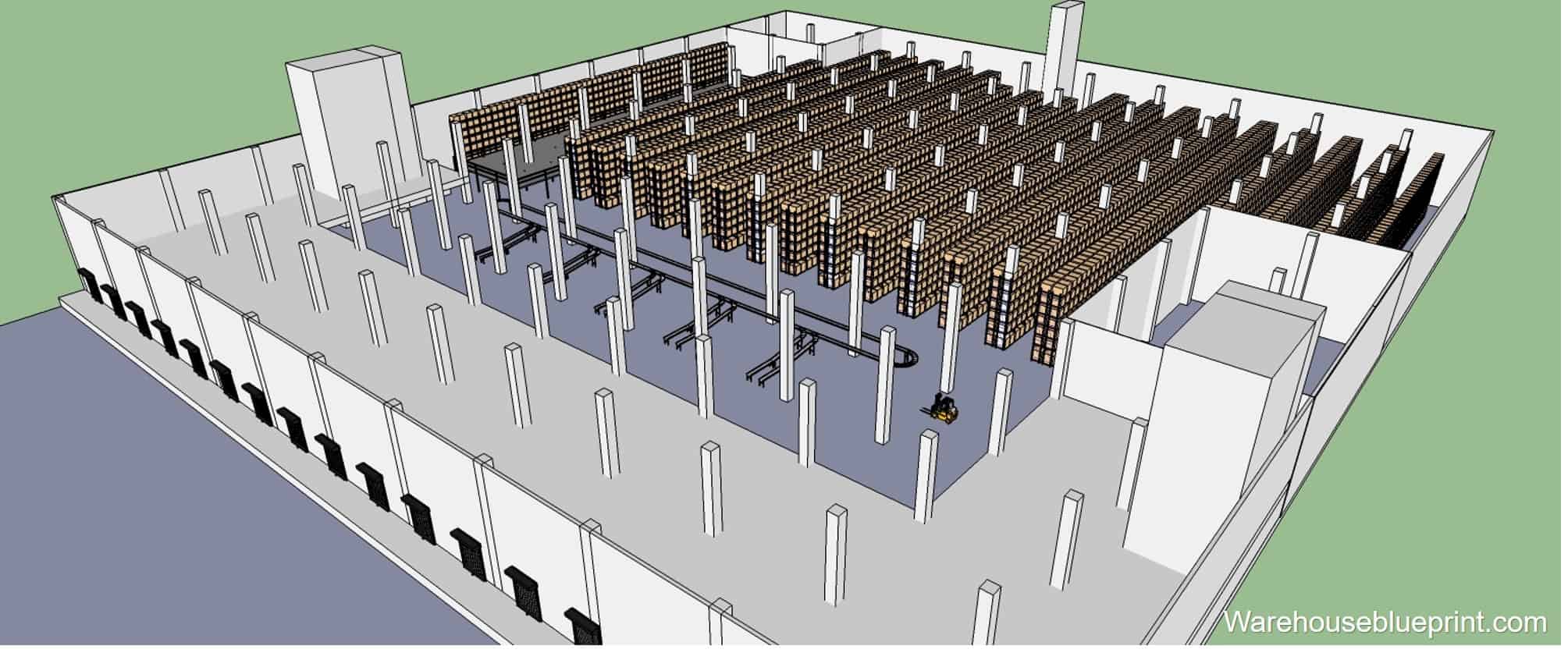
As warehouses evolve into spaces of technological brilliance and operational efficiency, Safety Prioritization remains the unwavering foundation upon which a resilient and secure future is built. Zoning the warehouse floor for clear separation between pedestrian areas and equipment zones is crucial. This zoning strategy ensures that pedestrians can move freely without encroaching on high-traffic zones, thus preventing potential hazards. Well-defined zones contribute to a systematic and organized operational layout. By automating order processing and fulfillment, WMS significantly reduces the margin of error.
Independent loading and unloading areas
This is particularly advantageous for facilities dealing with a high volume of small-sized items. Establishing strategic storage zones minimizes travel time during order picking. Warehouse personnel can navigate the facility more efficiently, reducing the time it takes to retrieve items and fulfill orders.
Reduced human error
When workers need to pick and pack inventory or handle materials and equipment, the way your space is designed matters. A thoughtfully organized space makes it easier to move through the facility and smooths out traffic flows between different workstations and departments. For example, a layout leaving enough room for designated and separated foot and vehicle traffic reduces safety incidents, which in turn drive productivity. As a result, workers can create more efficient workflows that lead to higher productivity. The first step is to determine how you will store inventory to optimize space to keep storage costs low. The next step is to consider the different stages of the fulfillment process, from receiving inventory to shipping orders.
Key Considerations in Establishing Strategic Storage Zones
They’ll need to know the ins and outs of the new layout — even if they’re supporting operations in far-flung locations off-site. Matterport can help you capture all the details of your space with a digital twin. With a virtual version of your space, you can quickly generate schematic floor plans of your warehouse to visualize the layout, measurements, and flow. From there, you can use your schematic floor plan as a starting point for design and layout conversations.

Loading and unloading areas (A)

From heavy equipment to the smallest inventory shelf, labels provide fast identification for all the objects in your warehouse. All are helpful in their own ways, and finding the right fit comes down to which one works with what you currently have and hope to achieve. Serialized inventory tracking can take your inventory management practices to the next level. Lastly, you should establish a system for tracking when hazardous materials are moved in or out of the warehouse.
Shrewsbury Planning Board hears industrial park proposal - Community Advocate
Shrewsbury Planning Board hears industrial park proposal.
Posted: Thu, 18 Jan 2024 08:00:00 GMT [source]
Reducing Last-Mile Costs through Regional Placement: The Power of Zone Skipping
Finnish Design Shop creates forest-set logistics centre to enable "a more sustainable future" - Dezeen
Finnish Design Shop creates forest-set logistics centre to enable "a more sustainable future".
Posted: Wed, 30 Nov 2022 08:00:00 GMT [source]
Try not to overthink regulations for designing and setting up your warehouse. OSHA’s main goal is to create and ensure the warehouse is a safe work environment for employees. When you design your warehouse around your brand’s specific needs, you ensure your square footage is fully used, you can control your products and how they’re picked and packed, and more.
Improved supply chain
A poor warehouse receiving process can can lead to stock control issues and high operational costs. Setting up a warehouse is more than just stocking shelves with ecommerce inventory. A warehouse should be designed to optimize storage and streamline fulfillment workflows. To maximise space and improve picking efficiency, warehouse slotting is a widely used technique in eCommerce. Effective slotting can lower total warehouse expenses and enhance inventory management procedures. Slotting is frequently arranged according to SKUs, product categories, or any other kind of product feature.
Even if this packing operation is unnecessary, this area also can be used for goods that have to be dispatched and loaded into the delivery or distribution vehicles. The reception area must be located as independently as possible from the rest of the warehouse, so that it can be used not just for receiving goods, but also for quality-control and sorting. In this way the loads accumulate, one after another, until the trailer of the lorry has been filled. To learn more about required warehouse safety standards, check out the Occupational Safety and Health Administration (OSHA) website. A notable advantage of light-duty (LD) shelving is that most units come with five or six adjustable shelves, which gives you helpful versatility if you’re storing various items of different dimensions.
Pioneering Operational Excellence through Technological Integration
Every warehouse should strive to move products as efficiently as possible from point to point. This is called flow, and when it’s optimized, your warehouse will run effortlessly. Constant maintenance is necessary to ensure your implemented warehouse layout continues to be successful. Maintenance ensures all the current warehouse processes are effective and still supporting goals. There are many factors to examine when choosing the right layout for your warehouse.
The profitability of manufacturing and retail companies is increased by good practices that are promoted by an optimal warehouse layout. Start designing your warehouse layout with a simple building outline or a ready-made template. The layout of the warehouse should always take into consideration the future changes your business might experience. It should have extra space to promptly handle production, storage volumes, and end-user delivery. If you’re having trouble coming up with warehouse organization ideas, it helps to look at existing warehouses. You can always tweak your warehouse’s layout as your business grows, but it’s important to have a reliable layout from day one.
To learn more about how ShipBob can help you optimize warehouse management and fulfillment with our WMS, click the button below. Whatever picking strategy you decide to implement, the goal is to enhance team productivity and maintain a high order accuracy rate as your business grows. In order for you and your team to complete warehouse and inventory audits, you need to make sure your warehouse is organized and orderly. If you have SKUs haphazardly scattered around the warehouse, you’ll struggle to keep track of inventory and warehouse efficiency and accuracy will be impacted. Additionally, a surplus of equipment may pose a safety concern for warehouse employees if space is compromised, and equipment isn’t properly maintained. Reorganising routes, zones, or even a full warehouse may appear complicated and time-consuming.
When you take the time and effort to create an efficient warehouse layout, you pave the way for saving time, money, and hassle for years to come. The last step before installing equipment, shelves, and tables is to test your warehouse traffic flow plan. To do this, measure off the space and apply masking tape on the floor to mark the positioning of your main units—whether they’re equipment, tables, or shelves. You don’t need to do this for every piece, but it’s important to mock up key workflow and production zone areas.
Because it can affect prices and productivity, warehouse layout design is crucial. The fulfilment process can be sped up, and storage costs reduced by carefully arranging the warehouse layout design without sacrificing order accuracy. A warehouse management system (WMS) keeps procedures operating smoothly by removing human error and utilising cutting-edge technologies. Software that manages staff productivity, keeps track of incoming and outgoing movements and synchronises storage and shipping procedures is all part of a WMS. With warehouse management systems, businesses can employ automation to monitor daily operations and guarantee that data is current and accessible at all times.


No comments:
Post a Comment